Laparoscopic Pyeloplasty
Reconstructive surgery to fix UPJ obstruction and save kidney function.
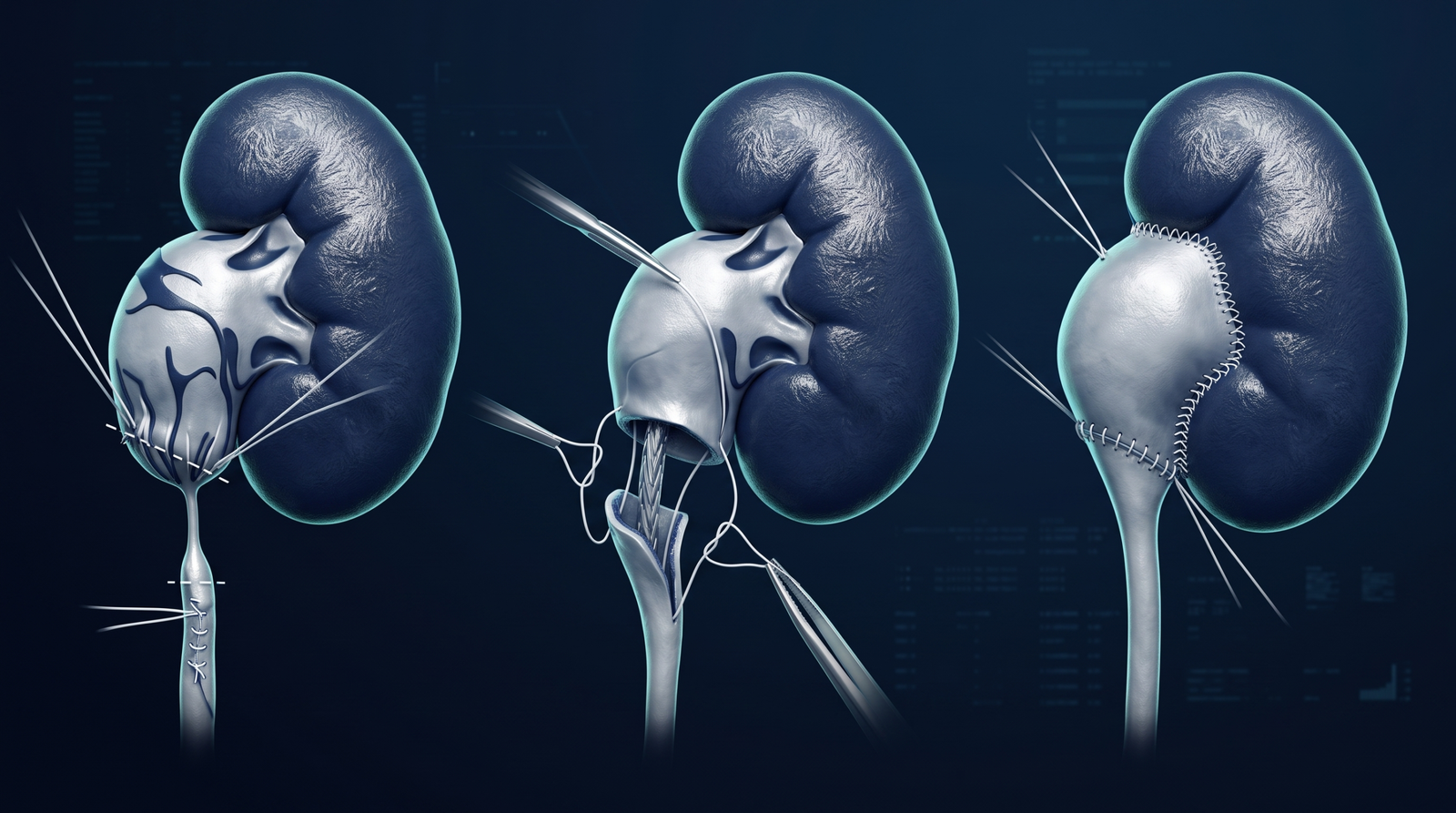
Repairing UPJ Obstruction
Ureteropelvic Junction (UPJ) Obstruction is a blockage at the point where the kidney connects to the ureter. It prevents urine from draining, causing the kidney to swell (hydronephrosis), which leads to pain and gradual loss of kidney function.
Laparoscopic Pyeloplasty is a highly advanced reconstructive surgery. Dr. Athar Hameed surgically cuts out the narrowed, blocked segment and sutures the healthy ureter back to the kidney pelvis, restoring wide-open drainage.
How The Procedure Works
1. Keyhole Access
3 or 4 small incisions (0.5 to 1cm) are made in the abdomen for laparoscopic instruments.
2. Excision
The surgeon identifies the blockage (often caused by a crossing blood vessel or scar tissue) and cuts it away.
3. Reconstruction
Using fine sutures, the healthy ureter is re-attached to the kidney, creating a wide funnel for urine to flow.
4. Internal Stenting
A JJ stent is placed across the new connection to protect the sutures as they heal over the next 4 weeks.
Why Choose Dr. Athar Hameed?
Historically performed via a large open flank incision, Laparoscopic Pyeloplasty offers the same >95% success rate but with vastly less pain, tiny scars, and a much faster return to normal life.
Frequently Asked Questions
Take the Next Step
Book a consultation with Dr. Athar Hameed today to discuss your symptoms and get a personalised treatment plan.