
RIRS (Retrograde Intrarenal Surgery)
The pinnacle of incision-less laser kidney stone removal.
What is RIRS?
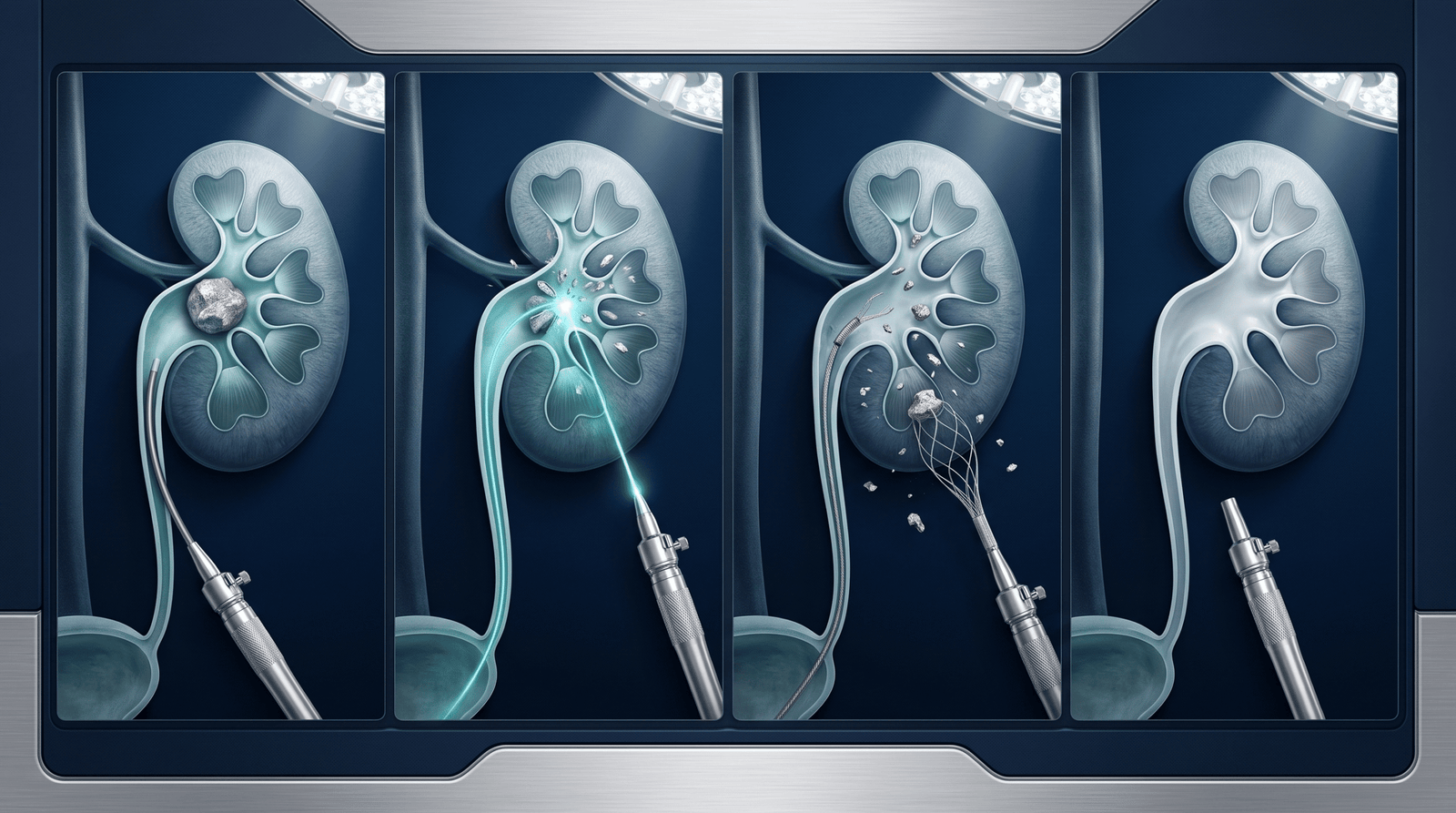
Retrograde Intrarenal Surgery (RIRS) is a state-of-the-art endoscopic procedure used to treat kidney stones without a single cut on the body. It represents a massive leap forward from older open surgeries.
A highly flexible digital scope is passed through the urethra, up the ureter, and directly into the kidney chambers. Once the stone is located, a high-powered Holmium or Thulium laser dusts it into fine powder.
How The Procedure Works
1. Access
Under general anesthesia, a flexible ureteroscope is passed through the natural urinary pathways—no incisions required.
2. Navigation
The digital tip of the scope can bend 270 degrees, allowing the surgeon to explore every calyx (chamber) of the kidney.
3. Laser Dusting
A microscopic laser fiber is deployed to obliterate the stone into sand-like dust, which washes out naturally.
4. Stent Placement
A temporary internal tube (JJ stent) is left in place for a week to allow the ureter to heal and prevent swelling.
Why Choose Dr. Athar Hameed?
Because RIRS is entirely natural-orifice surgery, there is zero bleeding from cuts, zero scarring, and minimal postoperative pain. Most patients return home the exact same day.
Frequently Asked Questions
Take the Next Step
Book a consultation with Dr. Athar Hameed today to discuss your symptoms and get a personalised treatment plan.